
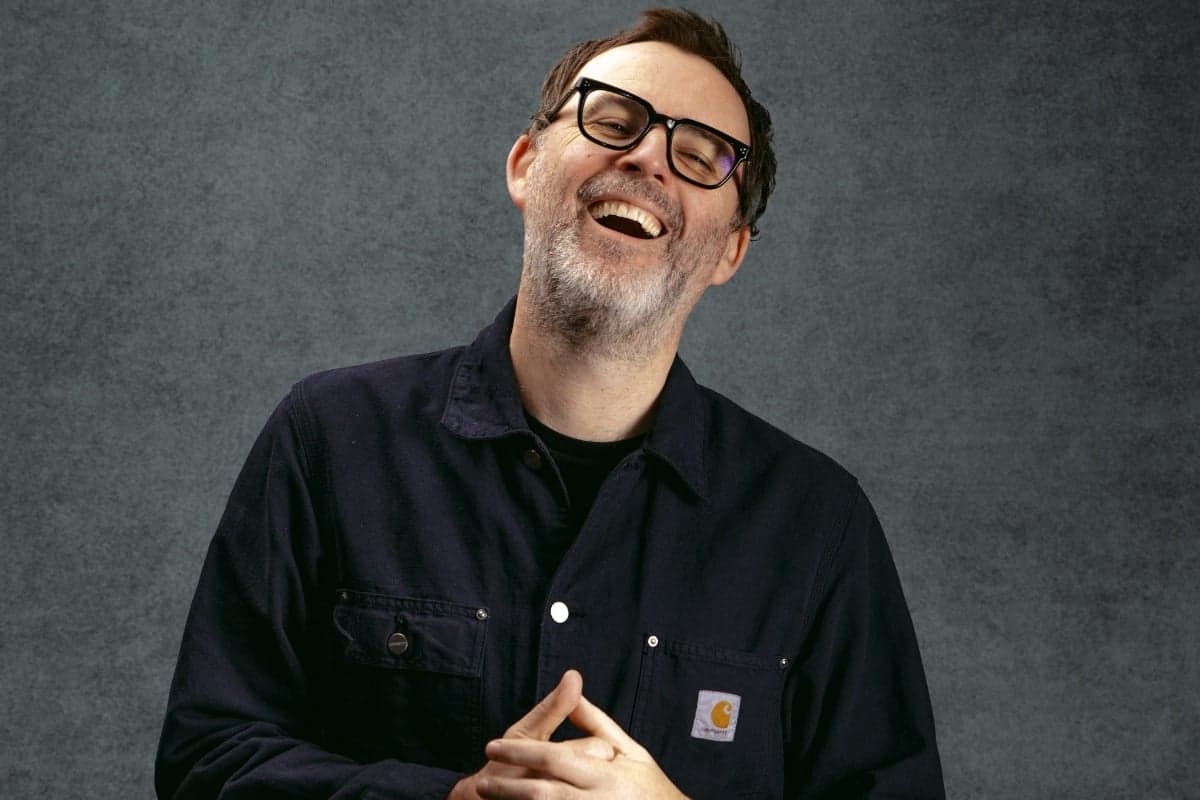
Australia’s advertising and marketing industries have lost the larrikin spirit that once made for impressive, impactful advertising, according to former Telstra and IAG marketer Brent Smart.
“Australian marketers want to play it safe,” Smart told B&T, following a panel discussion hosted by The Growth Distillery in Sydney last week.
“I’ve heard it many times on agency side and client side, the idea that we want a smile, not a laugh. You see it all the time in work — it’s almost funny. With comedy, you’ve got to go for it. Comedy is about exaggeration, hyperbole and ridiculousness.”
Now, according to Smart, Australia has lost ground to, of all places, the United States when it comes to humorous advertising. The US’ creative output relies heavily on celebrities, many of whom are comedians or comedic actors, such as Will Ferrell and Ryan Reynolds. Budgets play a role, but that never deterred Australia’s marketers and agencies in the past.
“Maybe the most concerning thing is that there was an Australian larrikin character that was very funny. Who didn’t care too much about political correctness and was funny. I think there’s now a cultural cringe towards that,” said Smart, a many-time inductee to B&T’s CMO Power List.
“There was a lot wrong with it. It was a bit sexist. A little bit racist. But there’s a larrikin spirit that has gone and I think we miss it a bit. There’s space for a more intelligent, modern interpretation of Aussie larrikinism.
“I want a version that’s more socially aware and inclusive… I think about what we did at Telstra over the past few years and comedy was a big part of it. The dry humour of the stop motion puppets. The [Steve] Buscemi ad is funny and we always felt comedy was part of our brand personality.
“But we went for a more intelligent humour. That’s the important bit. You’ve got to treat the audience with respect. Then you get to do something that’s intelligent and modern. I think that’s exciting. And I just don’t think we see it any more in Australian advertising.”
Smart was speaking on a panel hosted by The Growth Distillery’s Leigh Lavery and featuring Aisling Finch, Domain’s chief marketing and communications officer and Adam Ferrier, co-founder of Thinkerbell. The topic? Reflections on Cannes Lions.
“For something to be funny, you need to know where it’s coming from,” Ferrier said. “A lot of the great funny things in the past have come from a very strong personality or tone of voice that the brand has established that then gives them the permission to be funny.
“I’m wondering if brands don’t have the foundations to be funny. I don’t even know what a brand is but here it is trying to tell me a joke. I don’t find it funny because I don’t have years of people telling me that this is wicked humour. It needs to come back to the platform that the brand stands for. You need more clarity and then you can write a few good ads.”
Ferrier knows a thing or two about humour in advertising. Thinkerbell regularly produces work that causes viewers’ lip to curl, at least.
There’s some serious thinking supporting the case for levity in advertising. System1 founder Orlando Wood’s book Look Out found through research that humour — clever juxtapositions, satisfying repetitions, unexpected reversals and so on — is a great way to attract the broad attention that ads need. Humor, Look Out argues, is a source of flexibility in an increasingly rigid culture. It gets the attention of the right side of the brain.
Rob Farmer, the aptly named Australian Pork CMO, recently sat down with B&T to discuss why humour had been so effective in its work with then-creative agency Dig.
“We have about 12.5 per cent market share. We are an alternative choice. Chickens around 50 per cent, beef is kind of somewhere in between the two of us at around 30 per cent, and lamb’s a lot lower,” he told B&T. “So, we’re embracing that otherness with enticing twists. Because what it says about you, what you’re doing when you’re cooking with pork stir fry, is you’re bringing something more enticing than the convention to that moment with your family, and we’re wanting to own that, turn it into a positive it’s not something that’s difficult to do.”
Finch, speaking on the panel, said that her experience at Cannes had energised her to push the work further and that humour was often presented as a way to build consistently good creative.
“We’re about to shift some work and I hope people will find it funny. Maybe I was looking for this theme [during Cannes] but the amount of times humour came up,” she said.
“Sir John Hegarty has spoken about people paying good money to avoid ads and people don’t want to be sold to. Our industry is changing and what we produce either has to be born in reality but also has to be entertaining, worth people’s time and respectful of the audience that you give something back — either some utility, some information or a laugh.
“Humour came up in some many different talks. It’s very difficult to find a creative formula that scales. But if you’re looking for a formula, humour came up time and time again,” Finch said.
“Australian advertising is incredibly rational,” added Brent on the panel. “I feel like it’s all trying to persuade me to do something as opposed to trying to entertain. We have to step up. We won 11 Lions [including two Grands Prix, one for Suncorp produced by Leo and one for Uber, produced by Special’s Australian and US teams in collaboration], it wasn’t long ago that we used to win 50 and there’s way more categories now.
“We have to do better. This country used to really punch above its weight creatively. We can’t say that this year. We’ve got to lift the bar.”


Comments
No comments yet
Be the first to share your thoughts and start the conversation!