AI Search in 2026: 5 Surprising Insights from 300 Marketing Execs

AI search is exploding, but is it killing SEO? Not according to a new survey of 300 enterprise marketing executives. Here are the key findings that will shape your strategy for 2026 and beyond.
Finding 1: SEO Isn't Dead – AI Search Is Additive, Not a Replacement
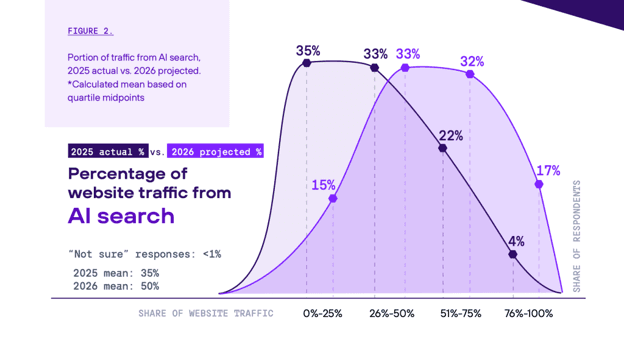
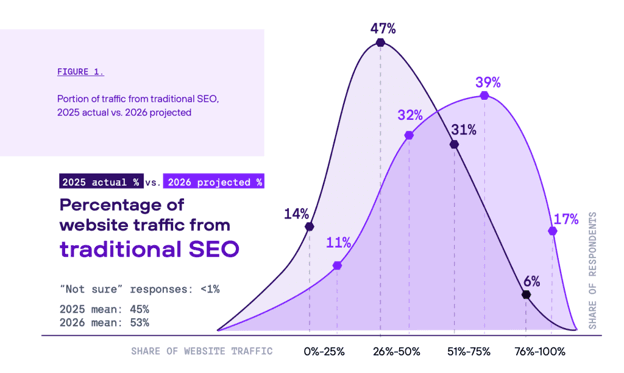
AI search now accounts for 35% of all website traffic, up from virtually zero in early 2023. But traditional SEO is also growing, with its share expected to rise from 45% to 53% by 2026. Consumers use both channels in tandem: they might ask a chatbot for recommendations, then search for specific products. This means AI search is adding a new discovery layer, not replacing existing ones.
Finding 2: Marketers Are Betting Big on AI Search, But Measurement Is a Mess
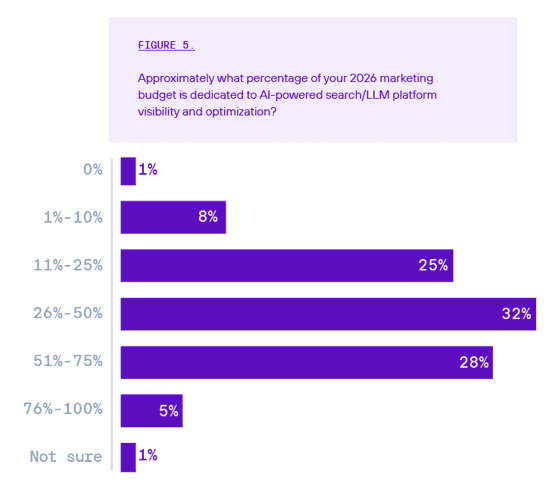
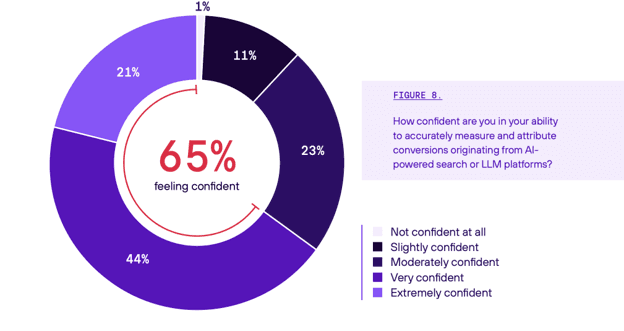
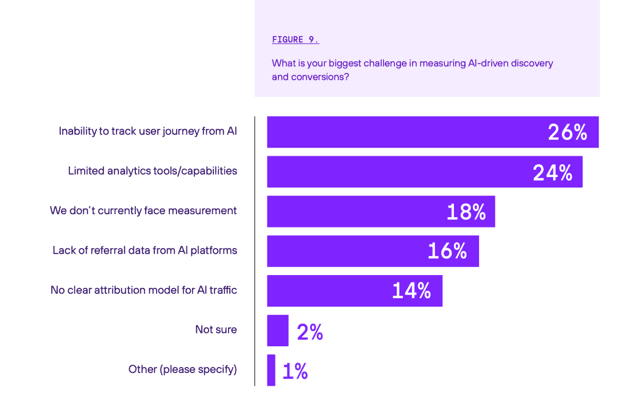
65% of executives are allocating at least 25% of their marketing budget to AI, and 28% are allocating over half. Yet 66% report measurement challenges. While 80% say AI attribution is clearer than traditional SEO, the reality is that current tools only capture last-click conversions. AI traffic often hides inside branded search growth or direct traffic, making true attribution elusive.
Finding 3: Consumer Behavior Is Occluded Between Channels
Google deliberately blurs the line between search, AI Overviews, and AI Mode. ChatGPT sends only a single UTM parameter, leaving marketers in the dark about user intent. To adapt, treat ChatGPT traffic as high-intent users who are further down the funnel. Don't force them through superfluous funnels.
Finding 4: Beware of Conflicts Between SEO and AI Search
SEO and AI search operate on different technologies. SEO ranks by relevance; AI aggregates signals to distill answers. Sometimes they conflict: creating two pages targeting opposite intents (e.g., “luxurious” vs. “affordable”) works for search but confuses LLMs. Ensure your content strategy aligns with both to avoid sending mixed signals.
Finding 5: The Future Is Both Optimistic and Uncertain
Marketers are bullish on AI: 97% report positive or neutral performance from AI search. However, concerns about measurement and attribution outweigh optimism. As AI search scales into a paid channel, marketers will need new attribution frameworks that don't exist yet. The key is to focus on end impact, not platform reporting, and invest in incrementality testing.
For the full report with findings 3-5, download the complete study.
- #aisearch
- #seo
- #attribution
- #marketingbudget
- #enterprisemarketing
Comments · 0