
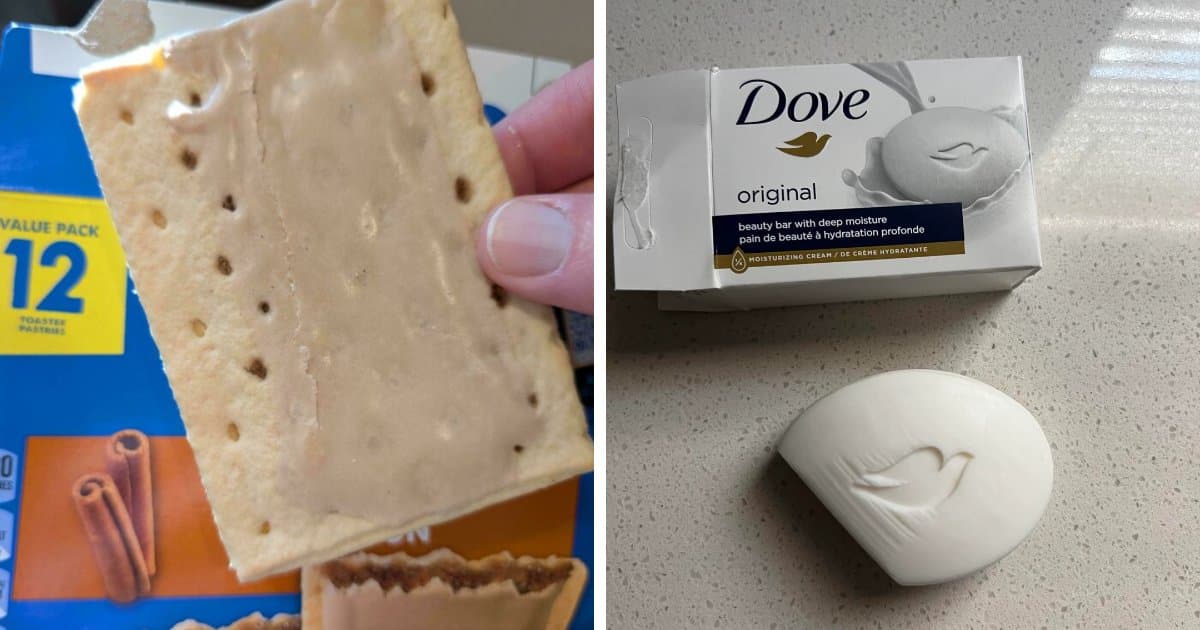
Brand loyalty is a win-win for companies and customers alike. Yet, honest and transparent companies that sincerely put their customers’ wants and needs first are rare. Much more often, you’ll come across greedy business owners who will do anything it takes to trick consumers into buying their products or services.
However, eagle-eyed customers can spot shadiness, shrinkflation, false advertising, and manipulative marketing from a mile away. We’ve collected examples of the most egregious and infuriating practices that companies use to deceive customers.
The Illusion of Choice
A supermarket shelf looks like freedom. Hundreds of brands. Endless options. But behind many of those logos are just a handful of powerful corporations. Companies like Nestlé, PepsiCo, The Coca-Cola Company, Unilever, Procter & Gamble, and Mondelez International own hundreds of smaller brands that appear to compete with each other. Different packaging. Different marketing. Often the same parent company. This is called the illusion of choice. The market looks diverse, but much of it is controlled by a small group of mega-corporations.
Shrinkflation and Deceptive Packaging
Shrinkflation is a tactic where companies gradually reduce product size while keeping the price the same. Examples include coffee cans shrinking from 908g to 640g at the same price, cheese ball buckets getting smaller over the years, and chocolate bars with larger gaps between pieces. Deceptive packaging also includes boxes that are much larger than the product inside, like Colgate MaxWhite toothpaste in an oversized box or a small tube of super glue in a huge package.
False Advertising and Misleading Claims
Companies often make claims that are technically true but misleading. For instance, a beverage label may say "100% juice" in large letters but in tiny print state "CONTAINS 27% juice." Another example is a "non-dairy" creamer that contains milk. Vitaminwater once advertised itself as an alternative to flu shots, which is not only misleading but dangerous.
The Cost of Deception
Customer loyalty is incredibly valuable. Increasing customer loyalty by just 5% can lead to profit increases of 25% to 95%. Loyal customers spend 67% more than new customers and are worth 2.5 times more revenue. Yet many companies prioritize short-term profits over long-term relationships, eroding trust and loyalty.
What Consumers Value
89% of US consumers are more loyal to brands that share their values. Other important factors include good customer service (82%), product availability (82%), strong data privacy (80%), and understanding customers (79%). Trustworthiness and transparency are valued by 60% of consumers.
How Businesses Can Improve
To build genuine loyalty, businesses must prioritize transparency, reliable disclosure, and customer needs. This involves everyone from employees to investors. When done right, customers get better products, employees find more meaning, and shareholders see greater returns. Manipulative marketing and shady packaging only lead to short-term gains at the expense of long-term success.
Examples of Infuriating Practices
- Underfilled Products: Bags of chips that are half empty, protein powder containers that aren't even half full, and cereal boxes with mostly air.
- Misleading Food Imagery: Frozen pizzas that look nothing like the box, sandwiches with minimal filling, and burgers that are smaller than advertised.
- Confusing Labels: Products labeled "natural" when it's just a brand name, "gluten-free" but made in a facility that processes gluten, and "flushable" wipes that are not biodegradable.
- Price Tricks: Same-sized bottles with different amounts of product, "share size" bags that are tiny, and "family size" packages that are smaller than before.
The Bottom Line
Consumer protection laws exist to defend against unfair trade practices. Your best defense is to be skeptical of marketing promises. Good products exist, but miracle ones do not. Companies that deceive customers may gain in the short term, but they lose trust and loyalty in the long run. Honest, transparent businesses are the ones that truly win.
Which of these shady practices annoys you the most? Share your thoughts in the comments.



Comments
No comments yet
Be the first to share your thoughts and start the conversation!