<?xml version="1.0" encoding="utf-8"?>
<rss version="2.0">
<channel>
<title>Marketing Remote Jobs | Find Remote Marketing Positions</title>
<link>https://www.marketingremotejobs.app</link>
<description>Discover top remote marketing jobs worldwide. Find remote positions in digital marketing, content, SEO, social media, and more. Apply to work-from-home marketing roles today.</description>
<lastBuildDate>Mon, 26 Oct 2026 10:31:35 GMT</lastBuildDate>
<docs>https://validator.w3.org/feed/docs/rss2.html</docs>
<generator>https://github.com/jpmonette/feed</generator>
<language>en</language>
<image>
<title>Marketing Remote Jobs | Find Remote Marketing Positions</title>
<url>https://www.marketingremotejobs.app/images/logo-512.png</url>
<link>https://www.marketingremotejobs.app</link>
</image>
<copyright>All rights reserved 2024, MarketingRemoteJobs.app</copyright>
<category>Bitcoin News</category>
<item>
<title><![CDATA[Ikea's CMO: Why LLMs Are the New Brand Battleground]]></title>
<link>https://www.marketingremotejobs.app/article/ikea-s-cmo-why-llms-are-the-new-brand-battleground</link>
<guid>ikea-s-cmo-why-llms-are-the-new-brand-battleground</guid>
<pubDate>Wed, 14 Oct 2026 04:03:51 GMT</pubDate>
<description><
## Consistency is Key
Riili believes that **brands must maintain a consistent value proposition** across all touchpoints. Ikea’s longstanding promise of *"beautiful, affordable furniture for many people"* positions it well for the LLM era. In contrast, brands that have historically shifted their messaging for short-term gains are now struggling because **AI can’t discern what they stand for**.
This sentiment was echoed by **Jon Roberts, chief innovation at People Inc.**, who declared that publishing has entered a **"brand era"** where the brand transcends any single channel. He warns: *"AI just scales bigger and cheaper than you will ever do."*
## The Fundamentals Still Matter
Despite the tech hype, Riili emphasizes that **the old basics—emotional connection, distinctive proposition, and consistency—are more important than ever**. AI’s role is to amplify these fundamentals at scale and with local relevance. At Ikea, the AI journey has moved from **speed and productivity** to **effectiveness and better decision-making**, but Riili cautions against over-reliance: *"I think in marketing we are still not there when it comes to creative and when it comes to producing content."* For now, AI is a **companion**, not a replacement.
## Creators and Brand Consistency
With operations in many countries, Ikea relies on **creators**—from professional influencers to passionate co-workers—to maintain a local presence. Riili insists that partnerships must be a **"win-win"** for the brand, creator, and consumer, allowing creators to speak in their own voice while adhering to **non-negotiable brand values**.
## The Rise of the Brand Brain
A recent **Dentsu Creative CMO survey** of 1,950 senior marketers reveals that **81% expect AI agents to make strong brand preference more important than ever**, and **78% worry that these agents will make their brand experience invisible**. Patricia McDonald, global chief strategy officer at Dentsu Creative, predicts a shift from a **brand book** to a **brand brain** that influences every organizational decision. *"The brand will become much more important than it has been for decades,"* she says.
As LLMs continue to shape how consumers interact with brands, the message is clear: **consistency, distinctiveness, and emotional connection** are the pillars that will keep brands relevant in the AI age.]]></description>
<author>contact@marketingremotejobs.app (MarketingRemoteJobs.app)</author>
<category>ai</category>
<category>branding</category>
<category>marketingstrategy</category>
<category>llm</category>
<category>cmo</category>
<enclosure url="https://digiday.com/wp-content/uploads/sites/3/2026/06/ai-beauty-digiday_7b0d11.webp" length="0" type="image/webp"/>
</item>
<item>
<title><![CDATA[Vietnamese Horror 'Bloodline: The Curse Within' Set to Terrify Busan Market]]></title>
<link>https://www.marketingremotejobs.app/article/vietnamese-horror-bloodline-the-curse-within-set-to-terrify-busan-market</link>
<guid>vietnamese-horror-bloodline-the-curse-within-set-to-terrify-busan-market</guid>
<pubDate>Sat, 10 Oct 2026 05:59:00 GMT</pubDate>
<description><![CDATA[## Vietnamese Horror 'Bloodline: The Curse Within' Heads to Busan Market
**Mockingbird Pictures** is bringing the Vietnamese supernatural horror film **'Bloodline: The Curse Within'** to international buyers at the **Asian Contents & Film Market (ACFM)**, part of the **Busan International Film Festival**. The company holds worldwide distribution rights to the film, which will open in theaters across Vietnam on **December 25**.
Directed by **Đinh Đức Thiện** and produced by **K8 Studio** and **Hoàng Gia**, the film is known locally as **“Huyết Thống.”** The story follows a celebrated pediatric heart surgeon whose daughter falls prey to a vengeful ghost. When medicine can do nothing against an age-old curse, he must turn the scalpel he has used to save lives on his own buried sins. The ghost itself has its roots in that long-hidden past.
Award-winning actor **Quách Ngọc Ngoan** leads the cast. He drew acclaim for his lead turn in Victor Vu’s **“The Immortal” (“Người Bất Tử”)** and was most recently seen in the hit **“The Journey of Heroes” (“Trại Buôn Người”)**. He is joined by **Quang Tuấn**, a familiar face in Vietnamese horror who fronts **“The Corpse”** franchise, and **Lan Phương**, who appeared in **“Phi Phong: The Blood Demon,”** the biggest-grossing Vietnamese horror title to date.
“The supernatural is only one half of ‘Bloodline,’” said director **Đinh Đức Thiện**. “What interested me was placing medicine and spirituality side by side, while exploring what people are willing to sacrifice when someone they love is threatened.”
**Hoàng Gia** previously led development on **“The Corpse 2” (“Quỷ Nhập Tràng 2”)**. He said the team wanted the film to be genuinely frightening, “while grounding the horror in something deeply human – family, blood ties and the consequences passed from one generation to the next.”
**Mockingbird** will present the title to buyers and distributors in Busan as part of its newest lineup of Vietnamese films. **Phong Duong**, the company’s business director, also serves as a co-executive producer on the project.
“Audiences today expect more from horror than a strong concept – they expect quality in every aspect of the filmmaking,” Duong said. “With ‘Bloodline: The Curse Within,’ we see that ambition in the storytelling, performances and overall cinematic experience, and that is the kind of Vietnamese cinema we want to bring to the world.”
**Mockingbird** works to push Vietnamese and Southeast Asian films into markets outside their home territories. Each year it handles upwards of **60 theatrical releases** and more than **100 titles for post-theatrical windows**, covering horror, comedy, romance and action. A growing share of its lineup is made up of standout hits and record-setters with appeal beyond their home market.]]></description>
<author>contact@marketingremotejobs.app (MarketingRemoteJobs.app)</author>
<category>vietnamesehorror</category>
<category>bloodlinethecursewithin</category>
<category>busanfilmfestival</category>
<category>horrormovies</category>
<category>asiancinema</category>
<enclosure url="https://variety.com/wp-content/uploads/2026/10/Bloodline-The-Curse-Within.jpg?w=1000&h=563&crop=1" length="0" type="image/jpg"/>
</item>
<item>
<title><![CDATA[Stocks vs. Bonds Showdown: Why the S&P 500 Keeps Ignoring 5%+ Treasury Yields (For Now)]]></title>
<link>https://www.marketingremotejobs.app/article/stocks-vs-bonds-showdown-why-the-s-p-500-keeps-ignoring-5-treasury-yields-for-no</link>
<guid>stocks-vs-bonds-showdown-why-the-s-p-500-keeps-ignoring-5-treasury-yields-for-no</guid>
<pubDate>Sun, 04 Oct 2026 04:10:35 GMT</pubDate>
<description><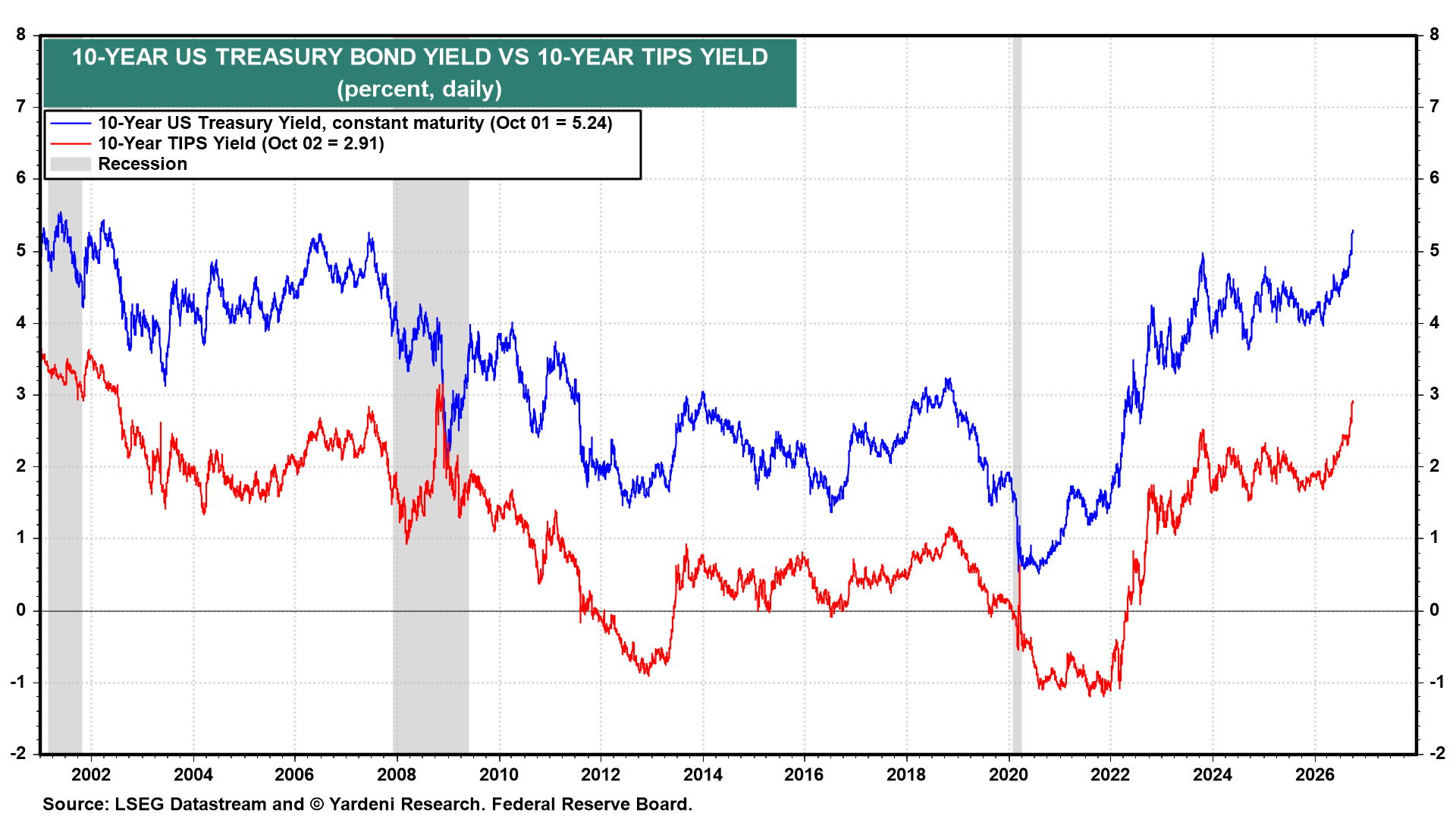
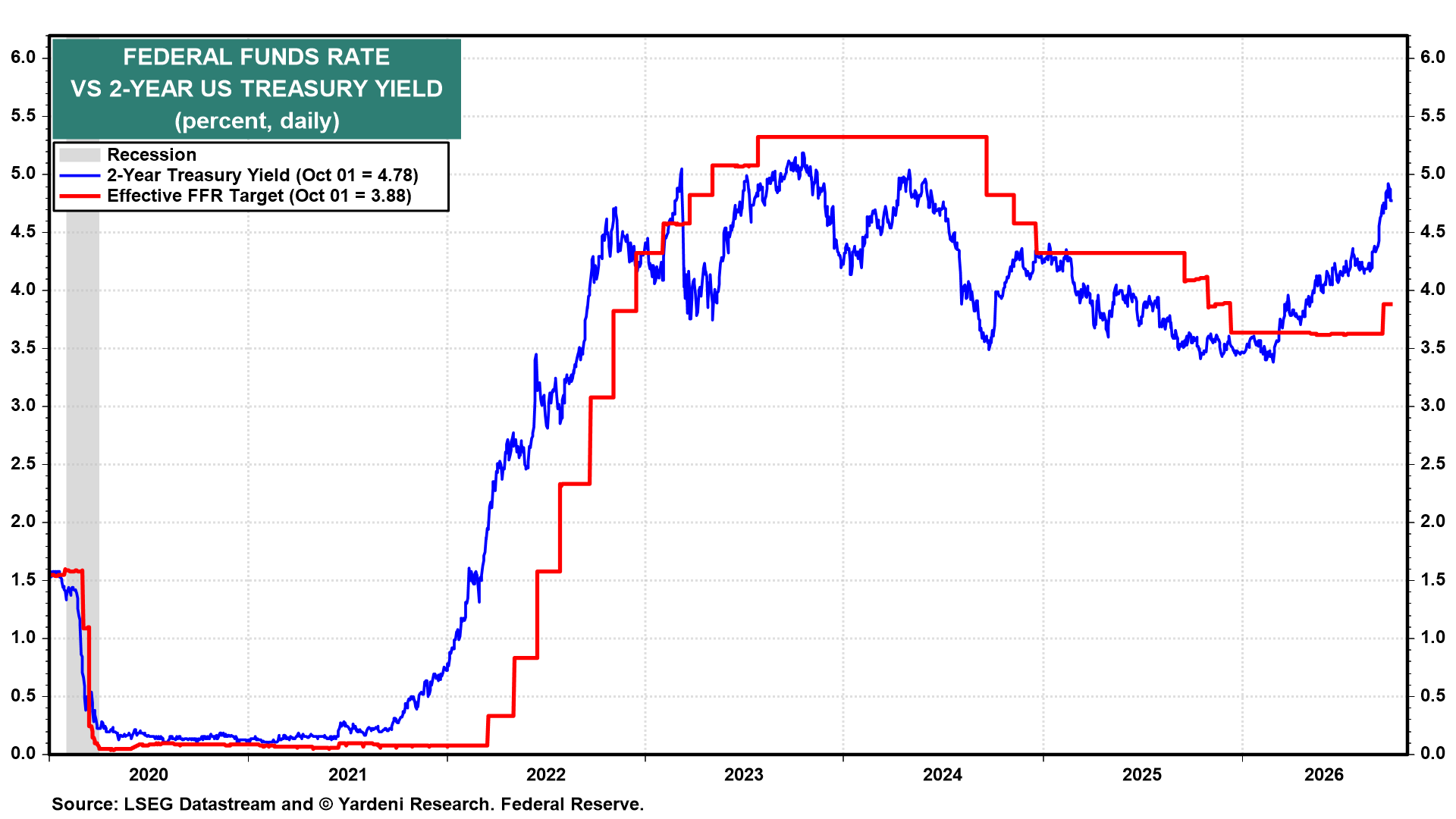
Friday's employment report disappointed: **payrolls rose only 29,000 in September** versus forecasts of 80,000–100,000, with 60,000 in additional downward revisions for July and August. The 10-year yield dipped on the news, then recovered — suggesting more than the economy's strength or weakness is driving yields. The **2-year yield sits at 4.78%**, well above the **3.88% federal funds rate**, discounting more Fed rate hikes ahead. The payroll miss looks like an outlier among otherwise solid labor market indicators.
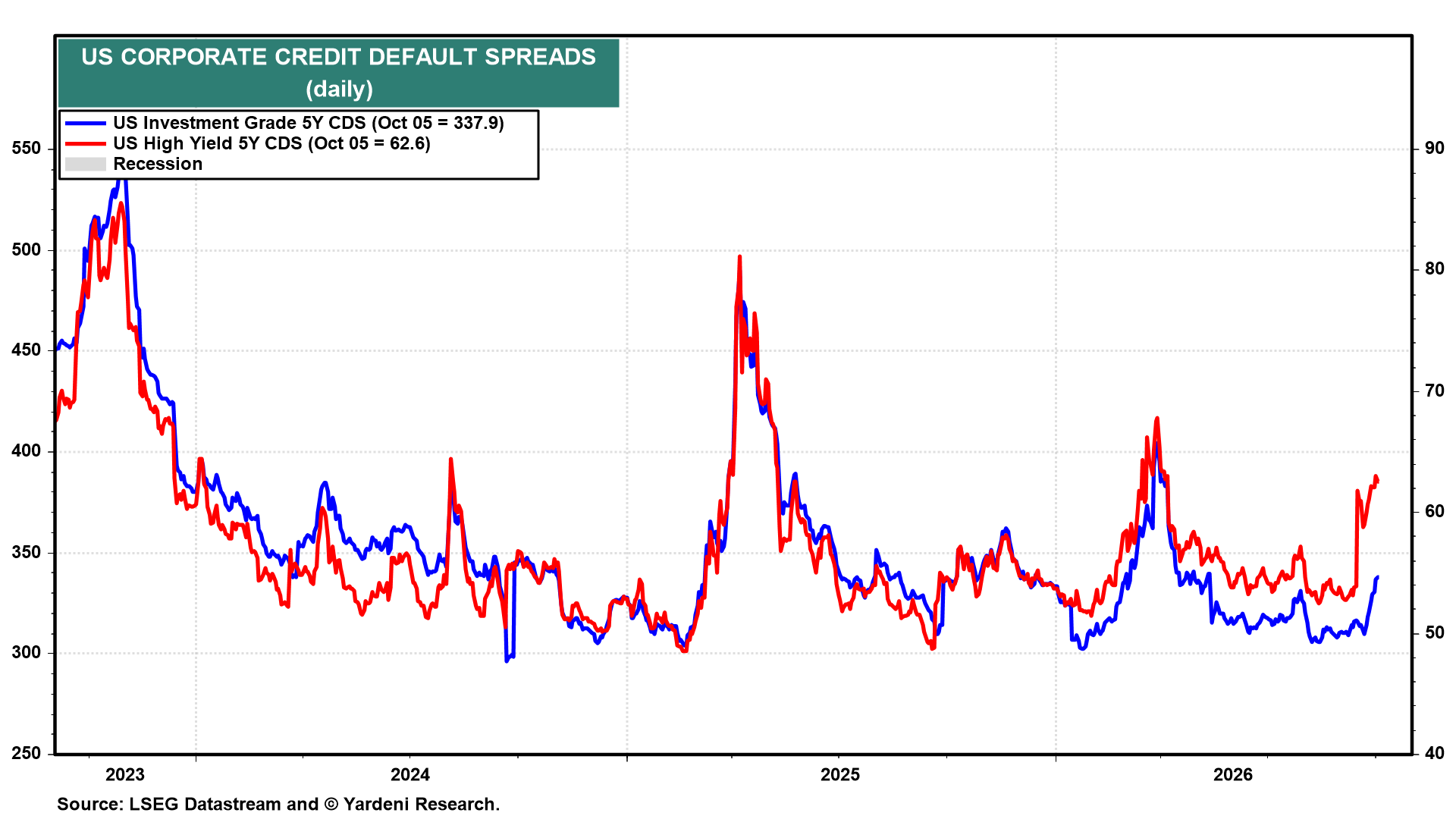
Meanwhile, **credit markets are starting to show signs of stress** as rates move higher. **Credit default swap spreads have widened** in recent weeks.
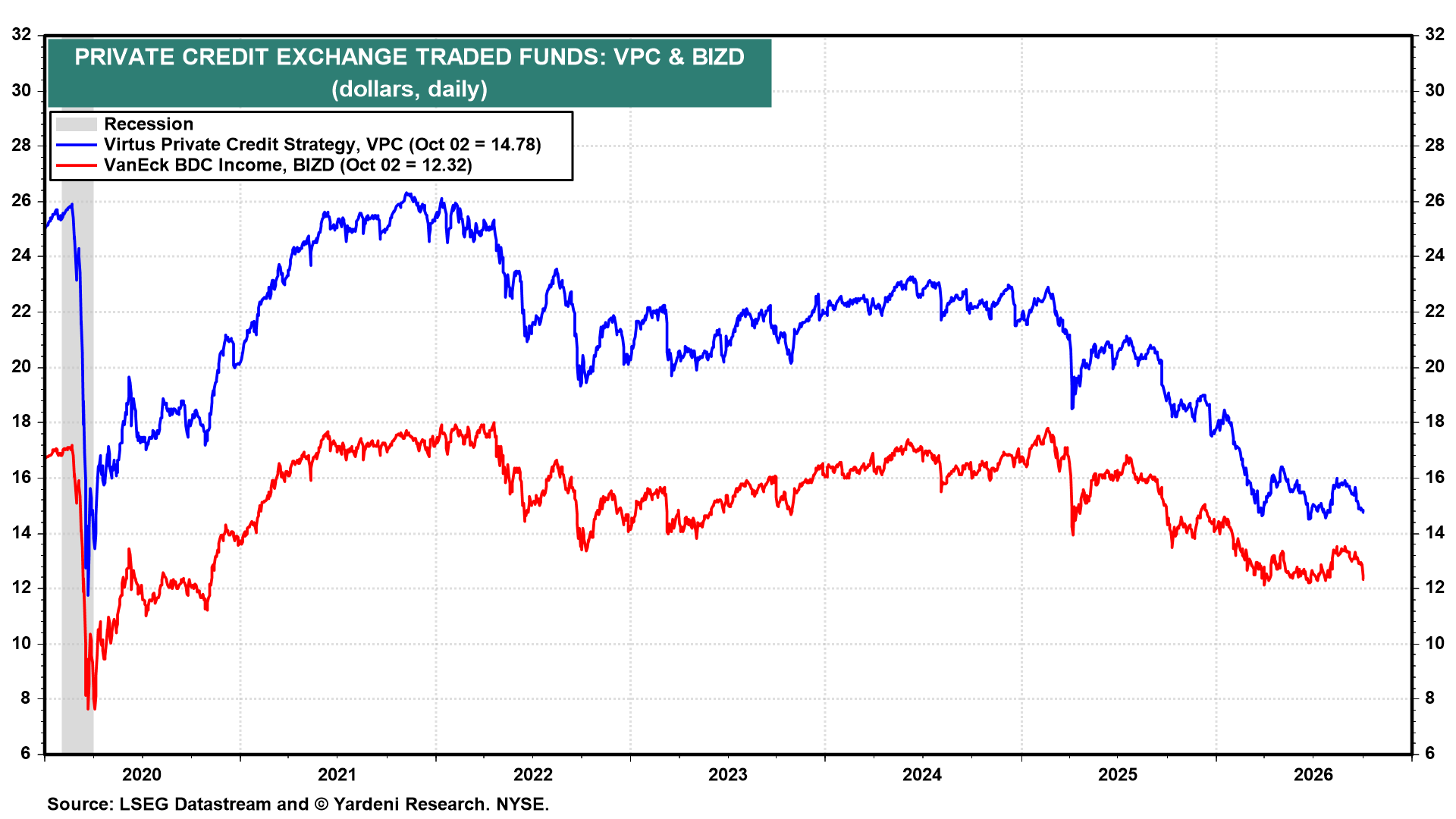
**Private credit is showing distress again.** The Virtus Private Credit Strategy ETF and the VanEck BDC Income ETF have taken another leg down, coinciding with another quarter of heavy redemption requests at nontraded private credit funds — many of which remain above their **5% quarterly withdrawal limits**. So far, the stress has stayed contained within private credit and hasn't spilled into the broad stock market.
## Stocks: From Summer Stall to Fall Stall
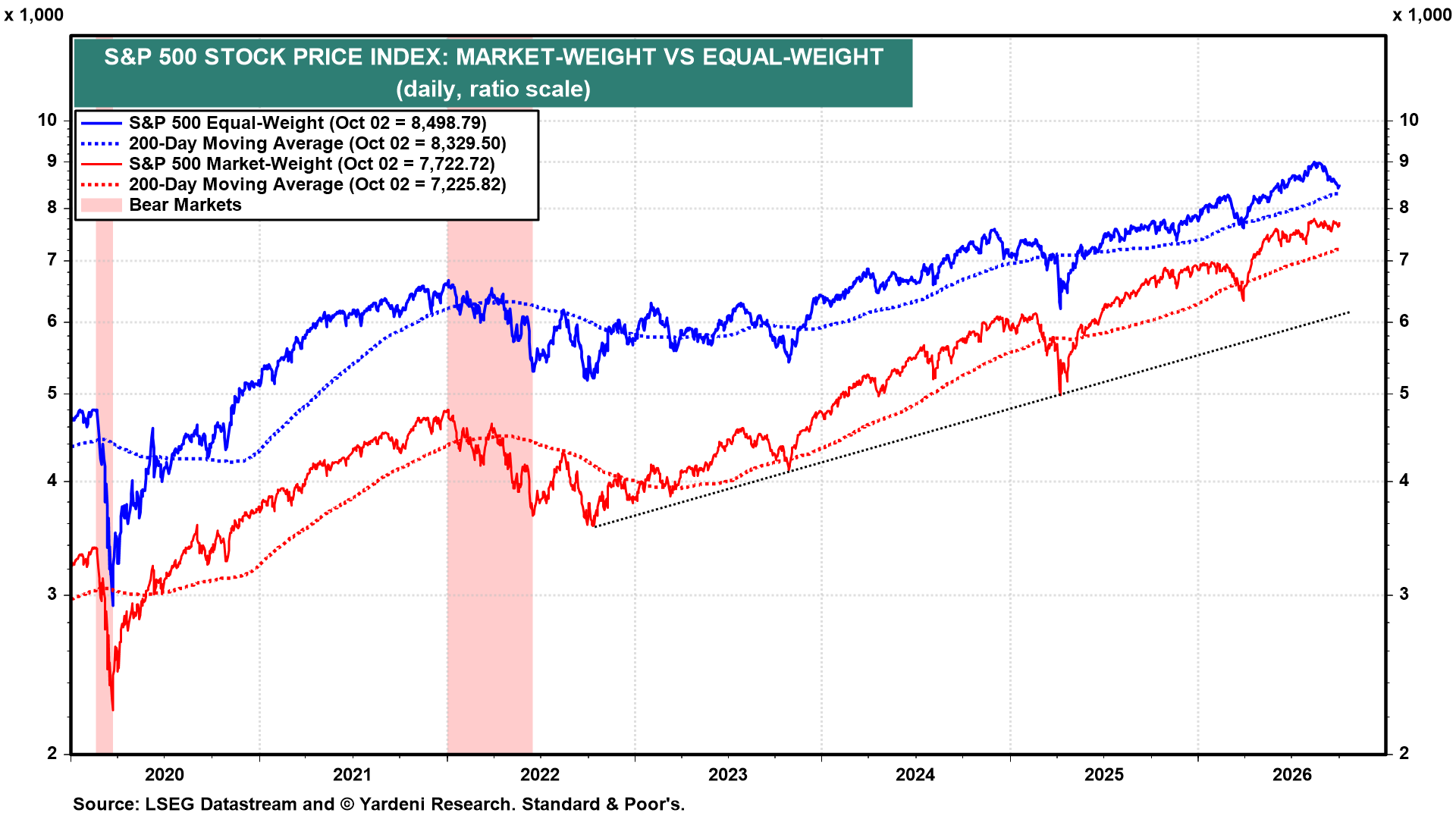
The **S&P 500 closed at 7,722.72** on Friday, just **1.0% below its August 13 record high**. The summer stall has turned into a **fall stall**. The **equal-weight S&P 500** is down **5.9%** from its August 14 record high and is now only **2.0% above its 200-day moving average**.
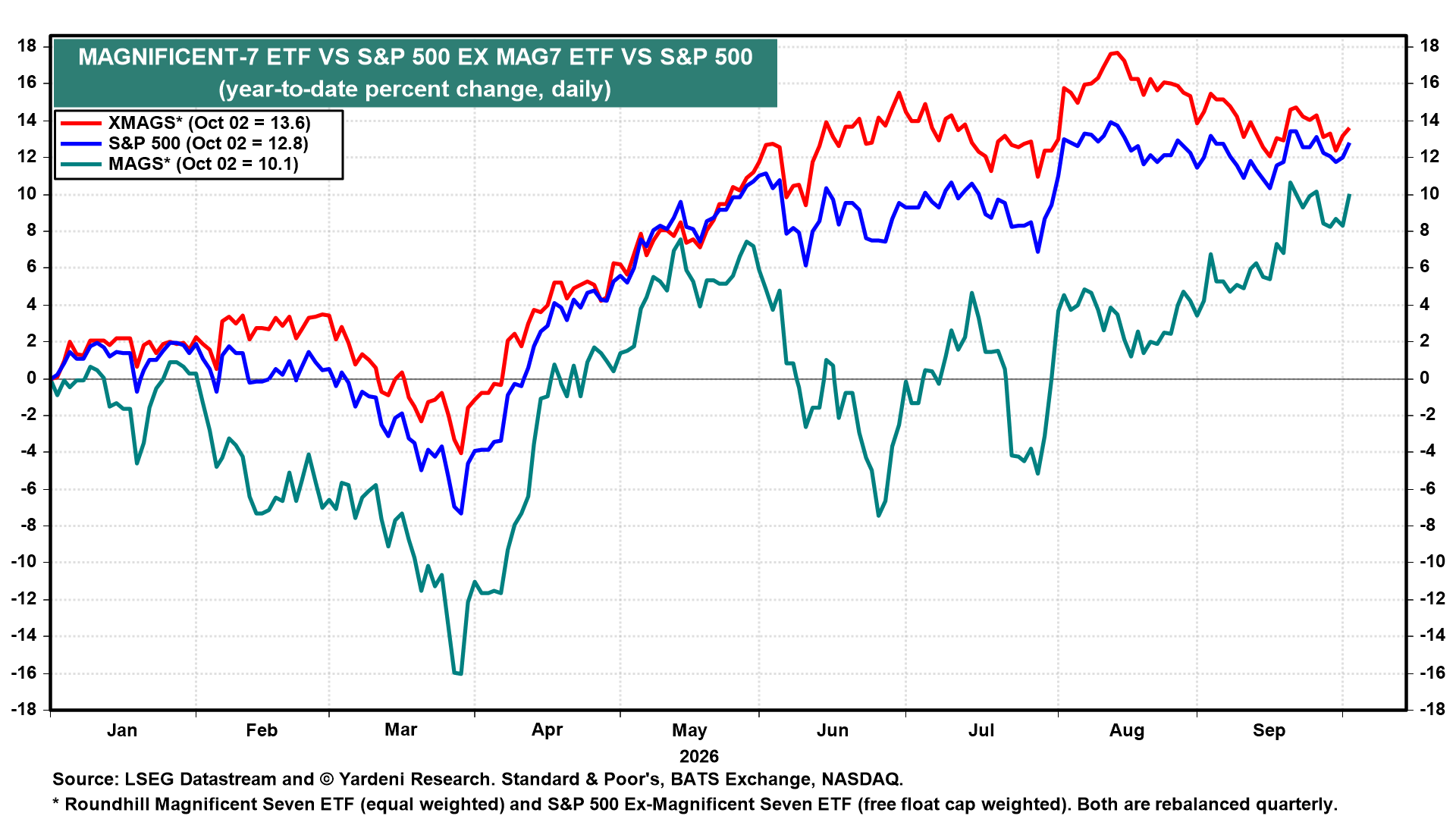
**Concentration worries are back** with the Magnificent-7's rebound since mid-August. XMAGS is up **13.6% YTD**, versus 10.1% for MAGS and 12.8% for the S&P 500 — and the broad market's outperformance has shrunk considerably since August. The hyperscalers' rebound since late July has been **led by Meta**.
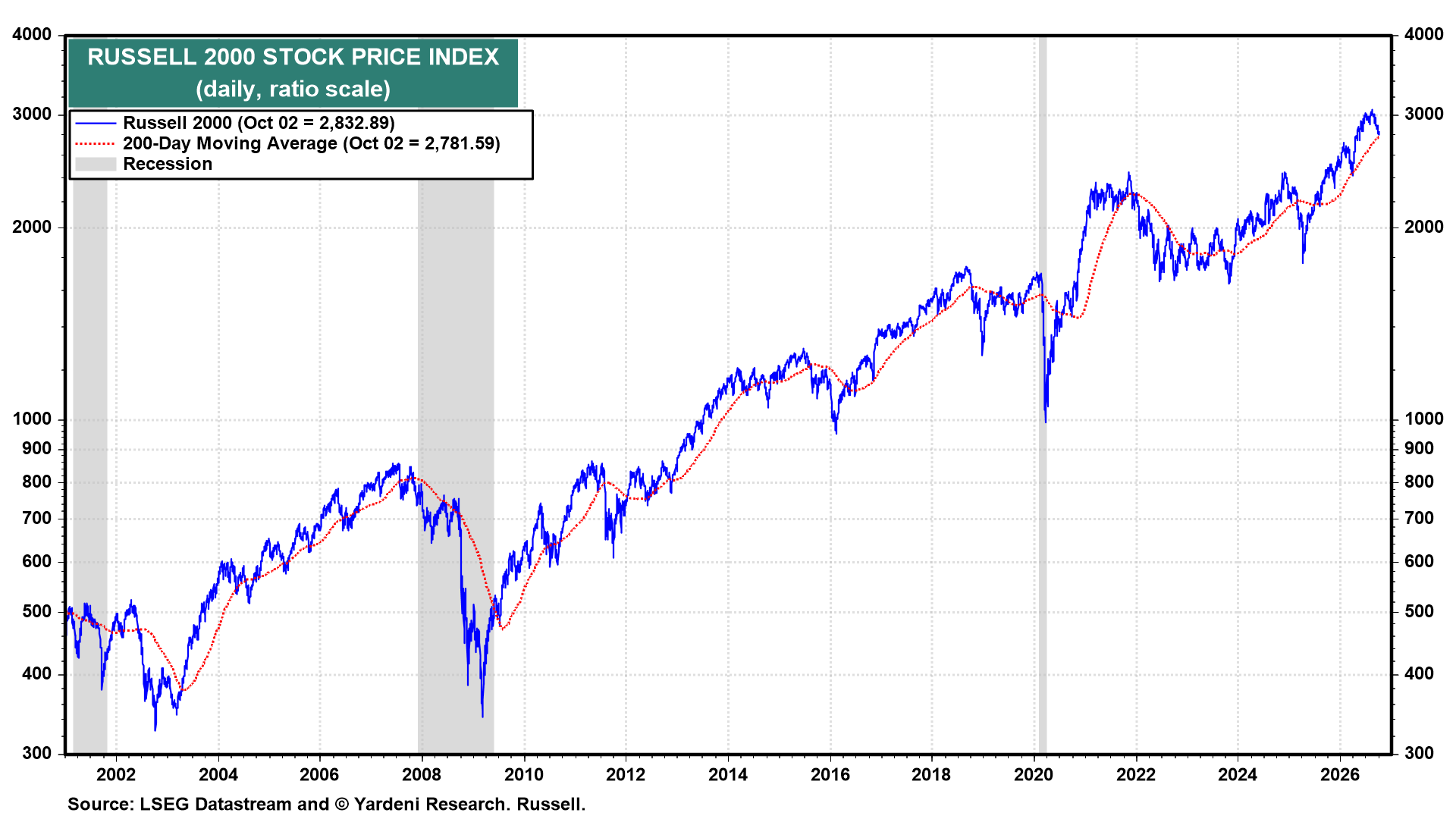
The **Russell 2000 is down 7.7%** from its August 14 record high and just **1.8% above its 200-day moving average**. SmallCaps are extremely sensitive to interest rates — if high bond yields start to bite the economy, **SmallCaps will be the first to react**.
## Earnings: The FEMO Story Remains Intact
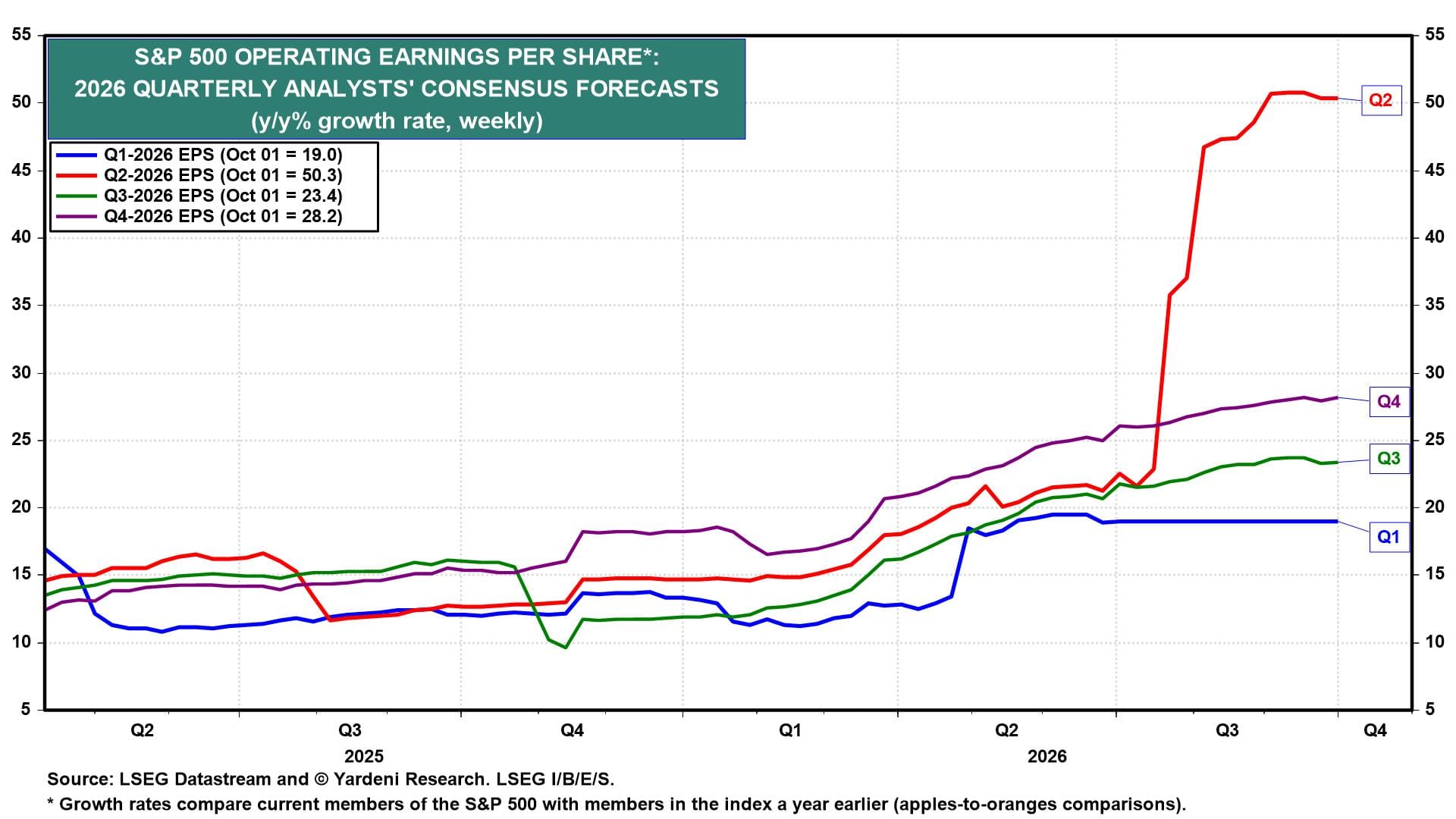
The **fabulous earnings momentum (FEMO)** story is still alive. **S&P 500 forward earnings rose to a record $406.45 per share** last week, and the 2027 consensus estimate has flattened around **$419**. Both are expected to climb to **$425 by year-end** on better-than-expected Q3 and Q4 results. **JPMorgan kicks off Q3 earnings season on October 13**.
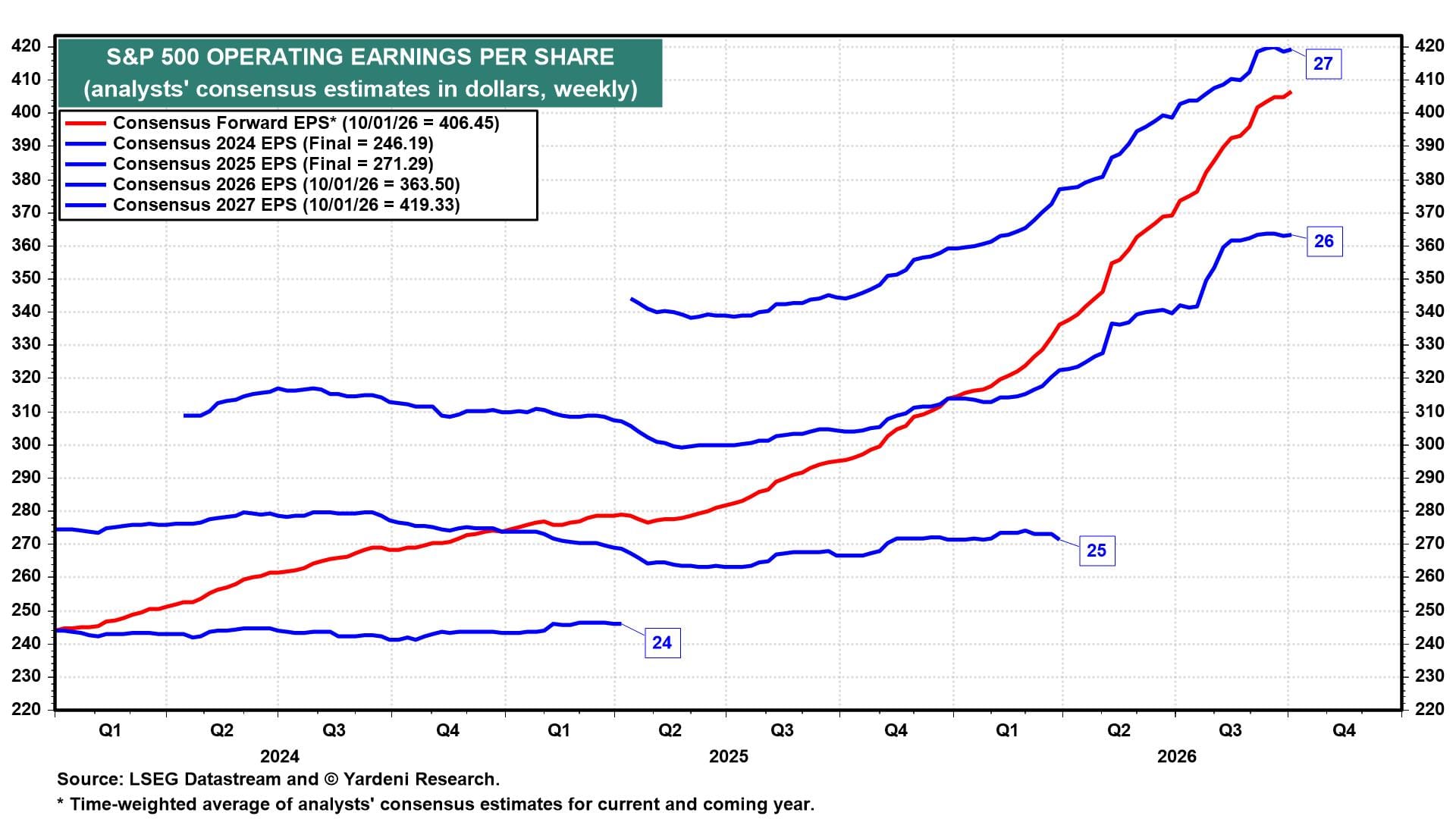
Industry analysts expect **Q3 earnings to rise 23.4% y/y** and **Q4 earnings to rise 28.2%**. Both estimates have edged down ahead of reporting season, as they usually do — and companies are expected to clear the lowered bar.
## Valuation: More Downside Than Upside
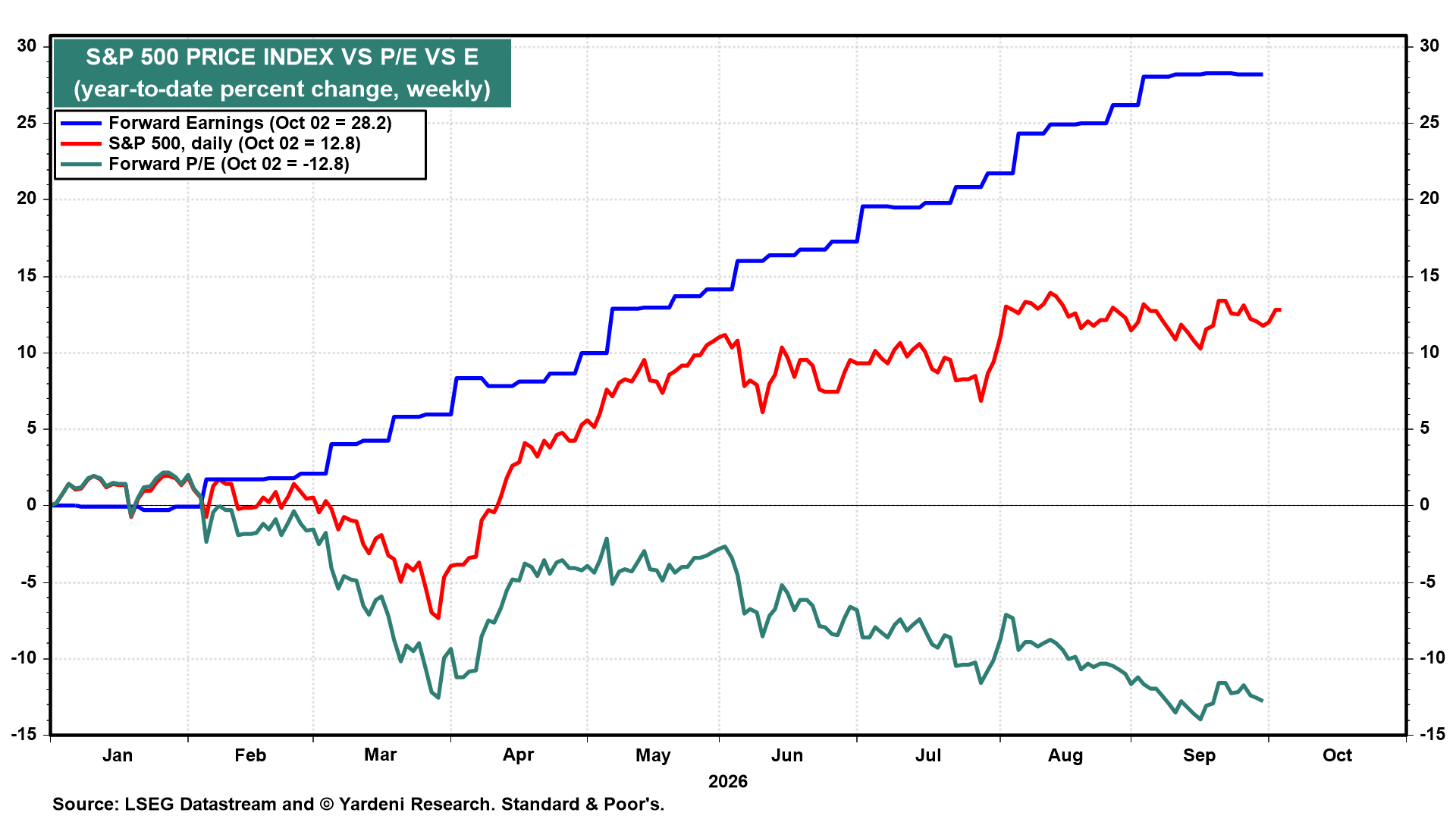
Since mid-August, the stock market's slippage has come **entirely from a lower multiple**. S&P 500 forward earnings are up **28.2% YTD** compared with 12.8% for the price index, while the **forward P/E is down 12.8%**.
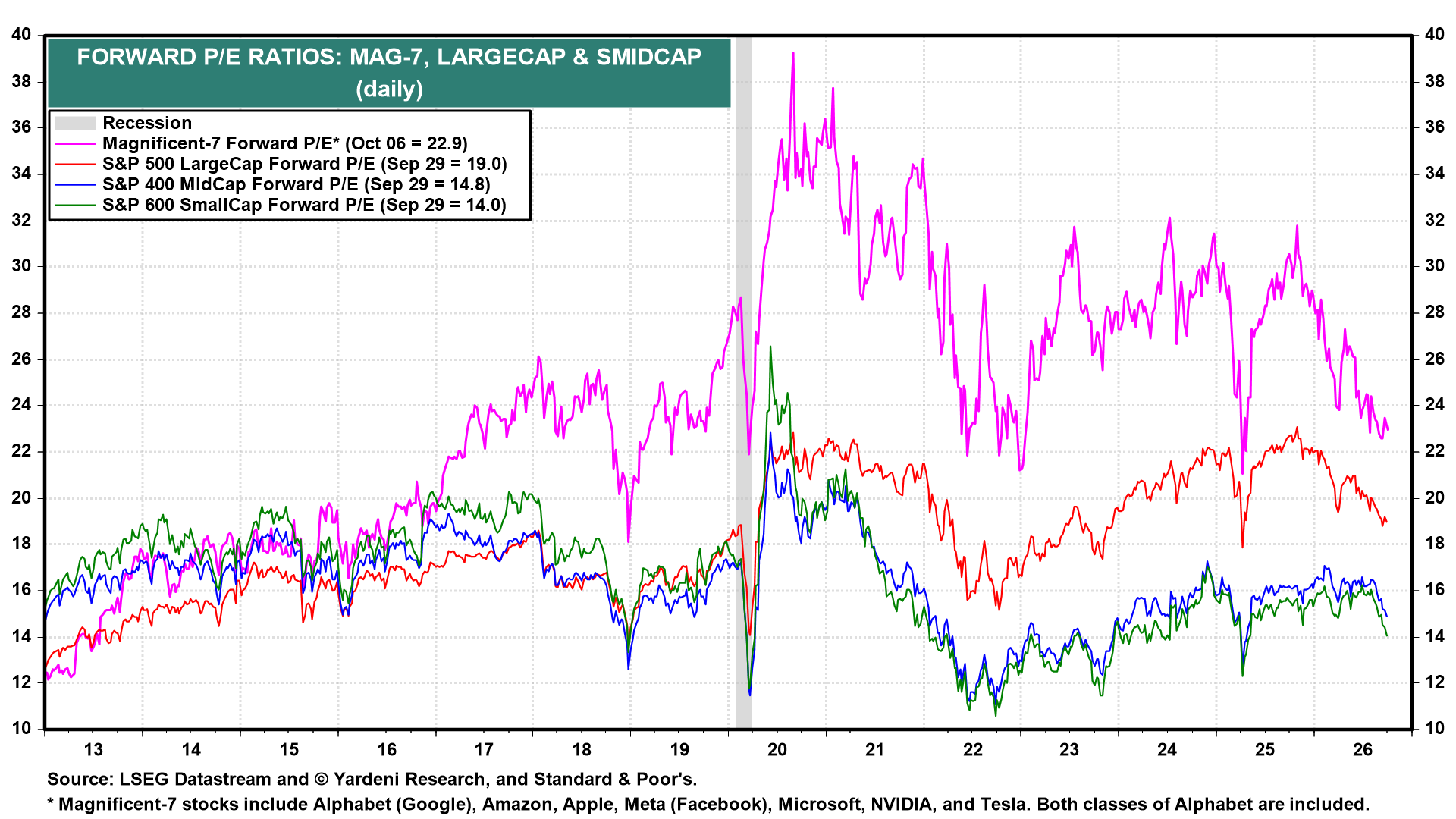
The **S&P 500's forward P/E is 19.0**, the Mag-7's is **22.9**, and SMidCaps' is **below 15**. The 7,900 S&P 500 target assumes an **18.6 multiple**. With the 10-year yield above 5.00%, there's **more downside than upside for valuations** through year-end.
## Sentiment: A House Divided
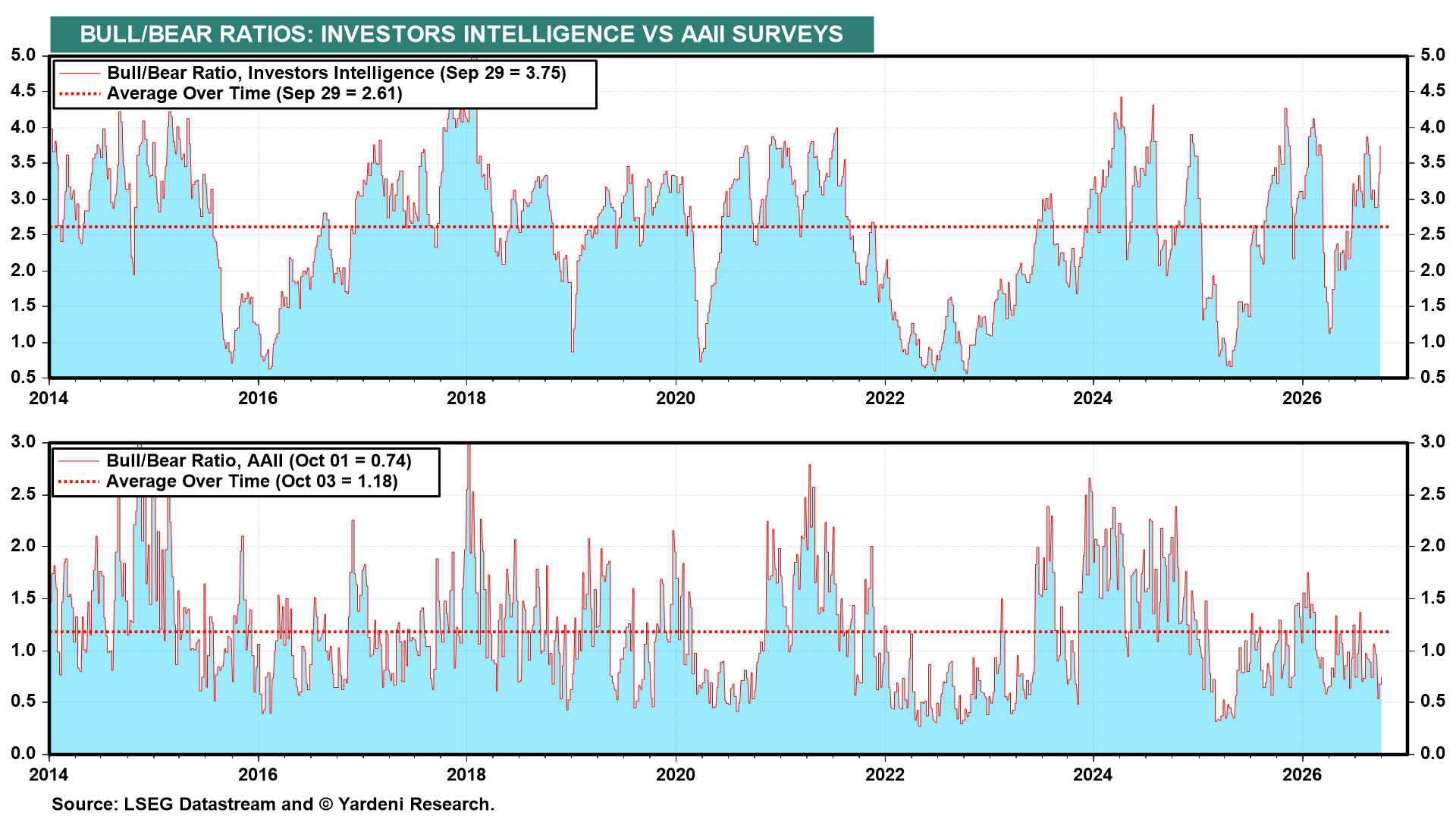
The two bull/bear ratios tracked are pointing in **opposite directions**. The **Investors Intelligence ratio is 3.75**, well above its 2.61 average, while the **AAII ratio is 0.74**, well below its 1.18 average. In short: **newsletter writers are too bullish, and individual investors are too bearish**.
]]></description>
<author>contact@marketingremotejobs.app (MarketingRemoteJobs.app)</author>
<category>stockmarket</category>
<category>treasuryyields</category>
<category>sp500</category>
<category>investing</category>
<category>marketanalysis</category>
<enclosure url="https://images.unsplash.com/photo-1742833776635-1245312f0c48?crop=entropy&cs=tinysrgb&fit=max&fm=jpg&ixid=M3wxMTc3M3wwfDF8c2VhcmNofDd8fGlnbm9yZXxlbnwwfHx8fDE3OTA5OTQ2ODd8MA&ixlib=rb-4.1.0&q=80&w=2000" length="0" type="image//photo-1742833776635-1245312f0c48"/>
</item>
<item>
<title><![CDATA[When “Watering Hole” Becomes Just “Hole”: The Viral Marketing Play Saving Denver’s Reservoirs]]></title>
<link>https://www.marketingremotejobs.app/article/when-watering-hole-becomes-just-hole-the-viral-marketing-play-saving-denver-s-re</link>
<guid>when-watering-hole-becomes-just-hole-the-viral-marketing-play-saving-denver-s-re</guid>
<pubDate>Tue, 01 Sep 2026 06:30:09 GMT</pubDate>
<description><![CDATA[### A Clever Twist on Conservation Messaging
In the heart of Denver, a series of stark white billboards has drivers doing double-takes. Instead of familiar phrases like “water boy,” “pool party,” or “snow,” the ads simply display fragmented words like **“boy,” “party,”** or **“hole.”** The catch? The word “water” has been aggressively struck through in thick orange ink. This isn’t a typo—it’s a deliberate, high-impact strategy by **Denver Water**.
### The Psychology Behind the Puzzle
Launched as part of the **“Use Only What You Need”** initiative, the campaign features 22 billboards and 21 bus shelter ads designed to make passersby pause, question, and ultimately connect the dots. As Stacy Chesney, Denver Water’s public affairs director, explains, the messaging drives home a critical reality: **the water is missing**. With record-breaking summer heat and failed snowpack, local reservoirs sit at just 73% capacity—far below the typical 94%.
Initially confusing, the campaign quickly ignited a wave of social media chatter. Locals took to TikTok and X to share their bewilderment, only to realize the clever visual metaphor. That initial confusion transformed into **massive organic engagement**, proving that even a utility company can leverage humor and curiosity to dominate digital conversations.
### Turning Awareness Into Action
The stakes couldn’t be higher. Facing its first major drought declaration in over a decade, Denver Water is urging its 1.5 million customers to help slash water consumption by **20%**. New restrictions will soon require residents to turn off lawn sprinklers by October. The campaign isn’t about fear-mongering; it’s about sparking conversation and directing traffic to practical conservation resources.
### Proven Success Meets Modern Creativity
This isn’t Denver Water’s first rodeo with impactful messaging. An earlier iteration of the same campaign in the early 2000s successfully drove a **22% drop in customer water usage** during historic drought conditions. Spearheaded again by Denver-based **Sukle Advertising & Design**, the $686,000 effort leans into the utility’s established personality. Agency founder Mike Sukle notes that tracking online sentiment shows overwhelmingly positive reactions. By making conservation feel approachable rather than punitive, they’ve turned a critical environmental message into a **shareable cultural moment**.]]></description>
<author>contact@marketingremotejobs.app (MarketingRemoteJobs.app)</author>
<category>marketingstrategy</category>
<category>droughtawareness</category>
<category>creativecampaigns</category>
<category>brandengagement</category>
<category>publicsectormarketing</category>
<enclosure url="https://www.denverpost.com/wp-content/uploads/2026/08/TDP-L-water-billboard-RJS-62884.jpg?w=5872&h=3981" length="0" type="image/jpg"/>
</item>
<item>
<title><![CDATA[How a 60-Second Lobster Grab Became a Masterclass in Experiential Marketing]]></title>
<link>https://www.marketingremotejobs.app/article/how-a-60-second-lobster-grab-became-a-masterclass-in-experiential-marketing</link>
<guid>how-a-60-second-lobster-grab-became-a-masterclass-in-experiential-marketing</guid>
<pubDate>Sun, 30 Aug 2026 05:35:39 GMT</pubDate>
<description><![CDATA[## The 60-Second Lobster Grab That Drew Crowds and Sold Out Tanks
In the heart of Pittsburgh’s Strip District, **Wholey’s Market** recently hosted its eighth annual **lobster grab**, a chaotic yet brilliantly executed event that turned a simple seafood tank into a stage for **experiential marketing**. When 24-year-old Carly Aprea successfully snatched eight live lobsters in under sixty seconds, the cheering crowd didn’t just witness a game—they experienced a masterclass in **customer engagement**.
### Why This Event Wasn’t Just Fun and Games
While the spectacle looked like pure entertainment, it was strategically designed by co-owners Sam and Jim Wholey to achieve two clear goals: **drive foot traffic** and **increase product sales**. By requiring participants to have purchased a lobster within the previous two weeks, the market created a clever **purchase incentive** that rewarded loyal customers while encouraging new visits. Store manager Mike Zook noted that event days consistently yield twenty to thirty additional lobster sales, proving that **entertainment-driven promotions** directly impact the bottom line.
### The Anatomy of a Successful Retail Promotion
The event’s success hinges on three core marketing principles:
- **Scarcity and Urgency**: The one-minute timer and limited entry slots create natural excitement.
- **Shareable Moments**: A host dressed as “Lobster Larry” with a megaphone transforms a routine transaction into a **viral-ready experience**.
- **Community Connection**: Longtime shoppers like the Aprea family return not just for fresh seafood, but for the tradition itself, building **brand loyalty** through consistent, localized storytelling.
For modern marketers, this case study underscores a vital lesson: **authentic, interactive experiences** often outperform traditional advertising. When brands prioritize **memorable interactions** over hard sells, they cultivate organic word-of-mouth, boost in-store conversion rates, and turn everyday customers into passionate advocates.]]></description>
<author>contact@marketingremotejobs.app (MarketingRemoteJobs.app)</author>
<category>experientialmarketing</category>
<category>retailstrategy</category>
<category>foottraffic</category>
<category>communityengagement</category>
<category>marketingevents</category>
<enclosure url="https://73f3e7d5672db1849e6c-6434aaf008a29447cc424990bc6a54a7.ssl.cf2.rackcdn.com/stories/202608300087/1140x_a10-7_cTC/20260829gllobsters-10_1788023009.jpg" length="0" type="image/jpg"/>
</item>
</channel>
</rss>